

Ground Support Equipment (GSE) refers to the wide range of vehicles, machinery, and systems used to service aircraft while they are on the ground between flights. These assets support nearly every non‑flight operation at an airport—ensuring aircraft are turned around safely, efficiently, and on schedule.
From towing aircraft to loading cargo, powering onboard systems, and transporting baggage, GSE forms the operational backbone of airports, cargo hubs, and maintenance facilities worldwide. While often operating behind the scenes, the performance and reliability of GSE directly impact on‑time departures, safety outcomes, and operating costs.
This guide provides a comprehensive, practical overview of Ground Support Equipment—what it is, how it’s categorized, where it’s used, and why it matters to modern aviation operations.
Why Ground Support Equipment Matters in Aviation
Aircraft are designed to fly—not to handle ground operations on their own. Without GSE, routine processes such as passenger boarding, cargo handling, refueling, and maintenance would be slow, unsafe, or impossible.
Effective GSE operations help aviation organizations:
- Reduce aircraft turnaround time
- Improve ramp and ground safety
- Support high‑volume cargo and baggage movement
- Maintain compliance with airport and aviation regulations
- Lower long‑term operating and maintenance costs
As air traffic volumes increase and airports face pressure to improve efficiency and sustainability, GSE has become a strategic operational investment rather than a background necessity.
Common Categories of Ground Support Equipment
Ground Support Equipment can be grouped into several core categories based on function. Most airports and cargo facilities rely on a combination of these assets to support daily operations.
Aircraft Towing and Pushback Equipment
This category includes tractors and tow vehicles used to move aircraft on the ground without engaging their engines. These units are critical for:
- Pushback from gates
- Aircraft repositioning
- Maintenance towing
Baggage and Cargo Handling Equipment
Baggage tractors, dollies, and cargo loaders move luggage, freight, and containers between terminals, aircraft, and sorting facilities. In high‑throughput environments, this equipment must be durable, maneuverable, and reliable under continuous use.

Ground Power and Aircraft
Servicing Equipment
Aircraft parked at the gate often rely on external power sources rather than onboard auxiliary power units (APUs). Ground power units (GPUs), air conditioning units, and preconditioned air systems fall into this category, helping reduce fuel burn and emissions while aircraft are on the ground.
Passenger and Cabin Support Equipment
This group includes passenger stairs, boarding ramps, and cabin service vehicles. These assets support boarding and cleaning operations, particularly at airports without jet bridges or for specific aircraft types.
Maintenance and Utility Equipment
Maintenance stands, service carts, and specialty tools allow technicians to perform inspections, repairs, and routine servicing safely and efficiently. While less visible, this equipment is essential to airworthiness and compliance.
Electric vs. Diesel
Ground Support Equipment
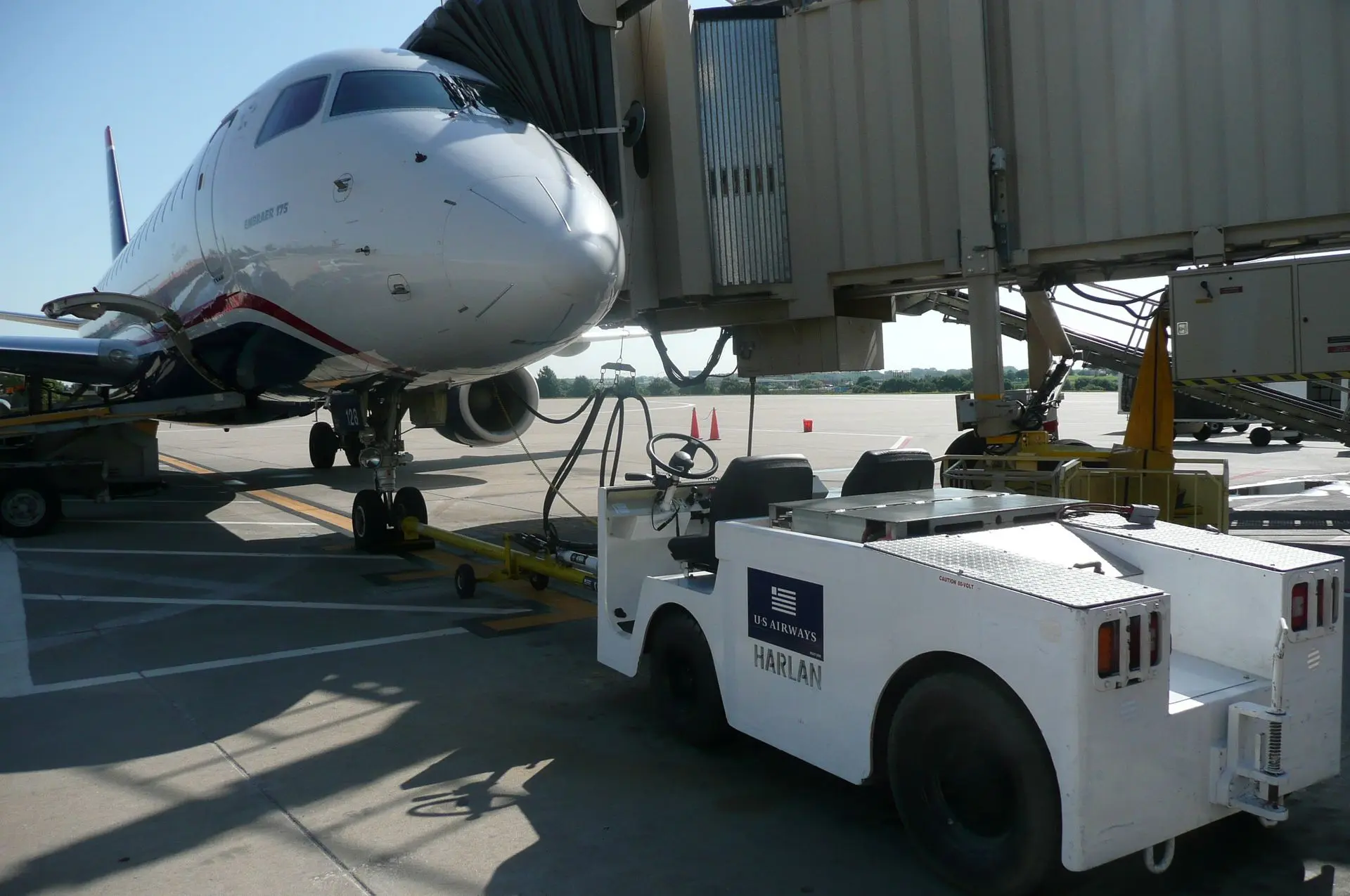
One of the most significant shifts in GSE over the past decade is the move toward electrification.
Electric GSE offers several advantages:
- Lower operating costs over time
- Reduced emissions and noise
- Fewer moving parts and lower maintenance requirements
Diesel and hybrid equipment still play a role in certain high‑load or long‑runtime applications, but many airports are actively transitioning fleets to electric alternatives to meet regulatory requirements and sustainability targets.
Where GSE Is Used
Ground Support Equipment is deployed across a wide range of aviation environments, including:
- Commercial passenger airports
- Air cargo hubs and logistics centers
- Military airfields
- Maintenance, repair, and overhaul (MRO) facilities
- Private and regional airports
Each environment places different demands on GSE, influencing equipment selection, fleet size, and powertrain choice.
Selecting the Right Ground Support Equipment
Choosing the right GSE involves balancing operational needs, safety requirements, and long‑term cost considerations. Key factors include:
- Aircraft types and weights
- Traffic volume and duty cycles
- Environmental and emissions regulations
- Available charging or fueling infrastructure
- Maintenance capabilities and parts availability
A well‑matched GSE fleet improves efficiency, reduces downtime, and supports scalable airport growth.
Safety and Compliance in Ground Support Operations
Safety is one of the most critical considerations in any ground support environment. GSE operates in close proximity to aircraft, personnel, and passengers, often under tight schedules and variable weather conditions.
Well-designed GSE programs support safety and compliance by:
- Reducing the risk of aircraft ground damage
- Improving operator visibility and control
- Supporting standardized ramp procedures
- Meeting airport authority and aviation safety regulations
Operator training, preventive maintenance, and equipment standardization all play a role in minimizing incidents and maintaining safe ground operations. As regulatory oversight increases, compliance-focused equipment selection has become an essential part of fleet planning.
Lifecycle Costs and Total Cost of Ownership (TCO)
The true cost of Ground Support Equipment extends beyond initial purchase price. Aviation organizations increasingly evaluate GSE based on total cost of ownership over the equipment’s operational life.
Key factors that influence GSE lifecycle costs include:
- Energy or fuel consumption
- Maintenance frequency and parts availability
- Equipment uptime and reliability
- Expected service life under operational loads
- Residual or resale value
Electric GSE often offers advantages in long-term operating costs due to reduced maintenance requirements and lower energy expenses, while durable construction and serviceability help extend usable life across all equipment types.
The Future of
Ground Support Equipment
The GSE industry continues to evolve alongside broader aviation trends. Automation, telematics, and electrification are reshaping how ground operations are managed and optimized. Data‑driven fleet monitoring and predictive maintenance are becoming standard tools for improving uptime and safety.
Manufacturers and operators alike are focused on building equipment that is not only reliable, but adaptable to changing regulatory and operational demands.
GSE at Harlan Global Manufacturing
At Harlan Global Manufacturing, we design and build ground support tractors engineered for demanding aviation environments. Our equipment supports cargo, baggage, and aircraft movement operations with a focus on durability, efficiency, and long‑term performance.
By combining practical engineering with operator‑focused design, Harlan helps aviation organizations keep ground operations moving safely and reliably—every hour of the day.
This article serves as Harlan Global Manufacturing’s primary educational reference on Ground Support Equipment, providing a foundational overview for aviation professionals seeking clarity, context, and operational insight.
What Is Ground Support Equipment (GSE)? A Complete Guide for Aviation Professionals